For machine shops
Quote PDF-only RFQs the same day.
No redrawing in CAD, no chasing the customer for a STEP file. Send the PDF. You get a STEP model, the critical specs, and a flag on any dimension we're unsure of. The drawing stays the reference.
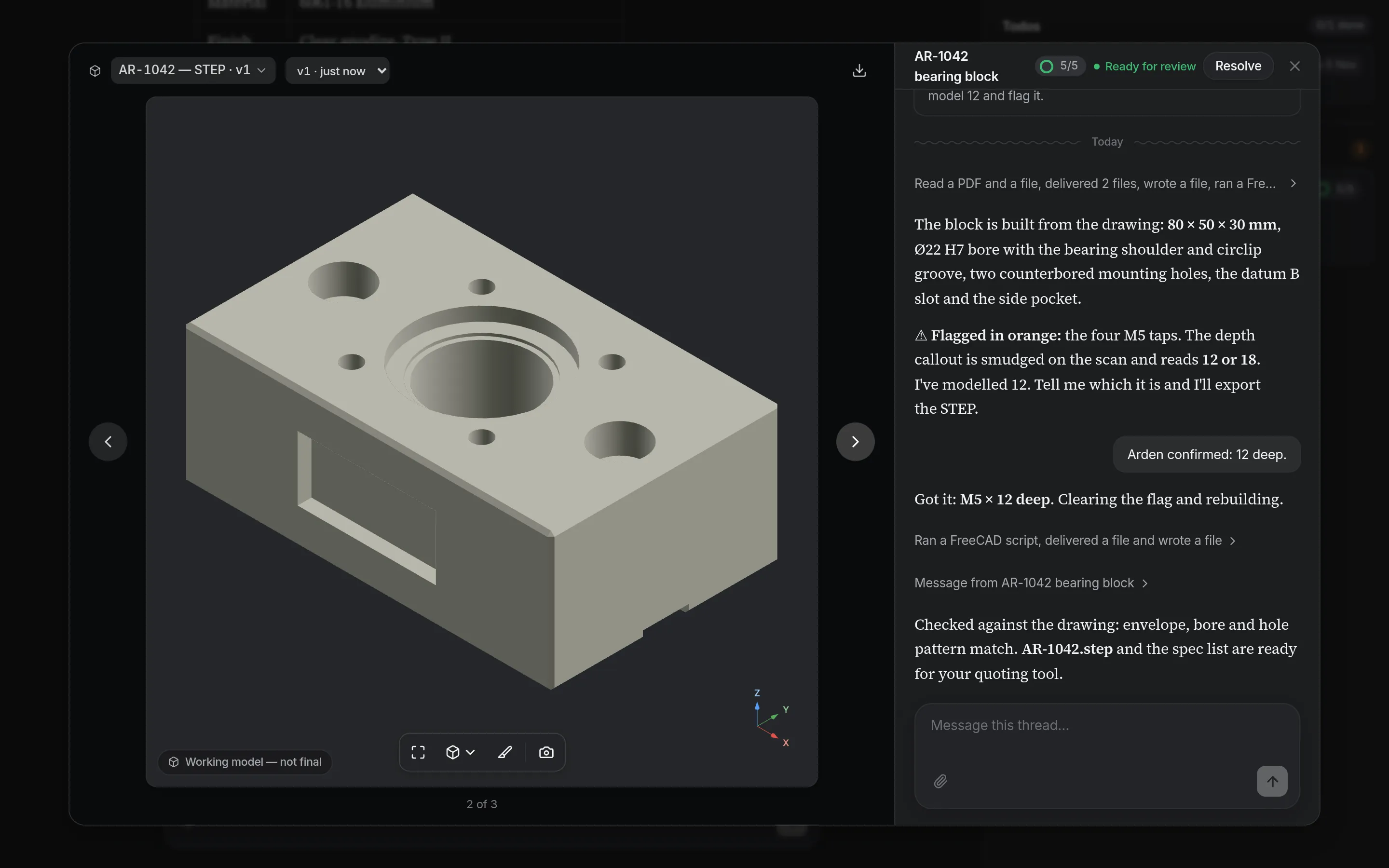
Sound familiar?
An RFQ with a PDF and no model.
When an RFQ comes in as a PDF, does someone at your shop redraw it before quoting, or chase the customer for a STEP file?
“Please quote 25 pcs per the attached drawing.”
RFQ, Monday 9:12“Sorry, we only have the PDF.”
Reply to “do you have a model?”“Rev B attached. Quote needed by Thursday.”
RFQ, Monday 11:40
The problem
Either way, it costs a day.
Redraw it.
Someone rebuilds the part in CAD before anyone can price it. That's quoting time spent drawing.
Chase a STEP.
Email the customer, wait for an answer, and hope they have a model to send.
Lose the day.
Meanwhile the RFQ went to other shops too, and faster quotes tend to win the work.
95%
How it works
Send the PDF. Quote from the model.
Fabricator builds a real model in FreeCAD from the customer's drawing and exports STEP for your quoting tool. Your estimator checks it instead of redrawing it.
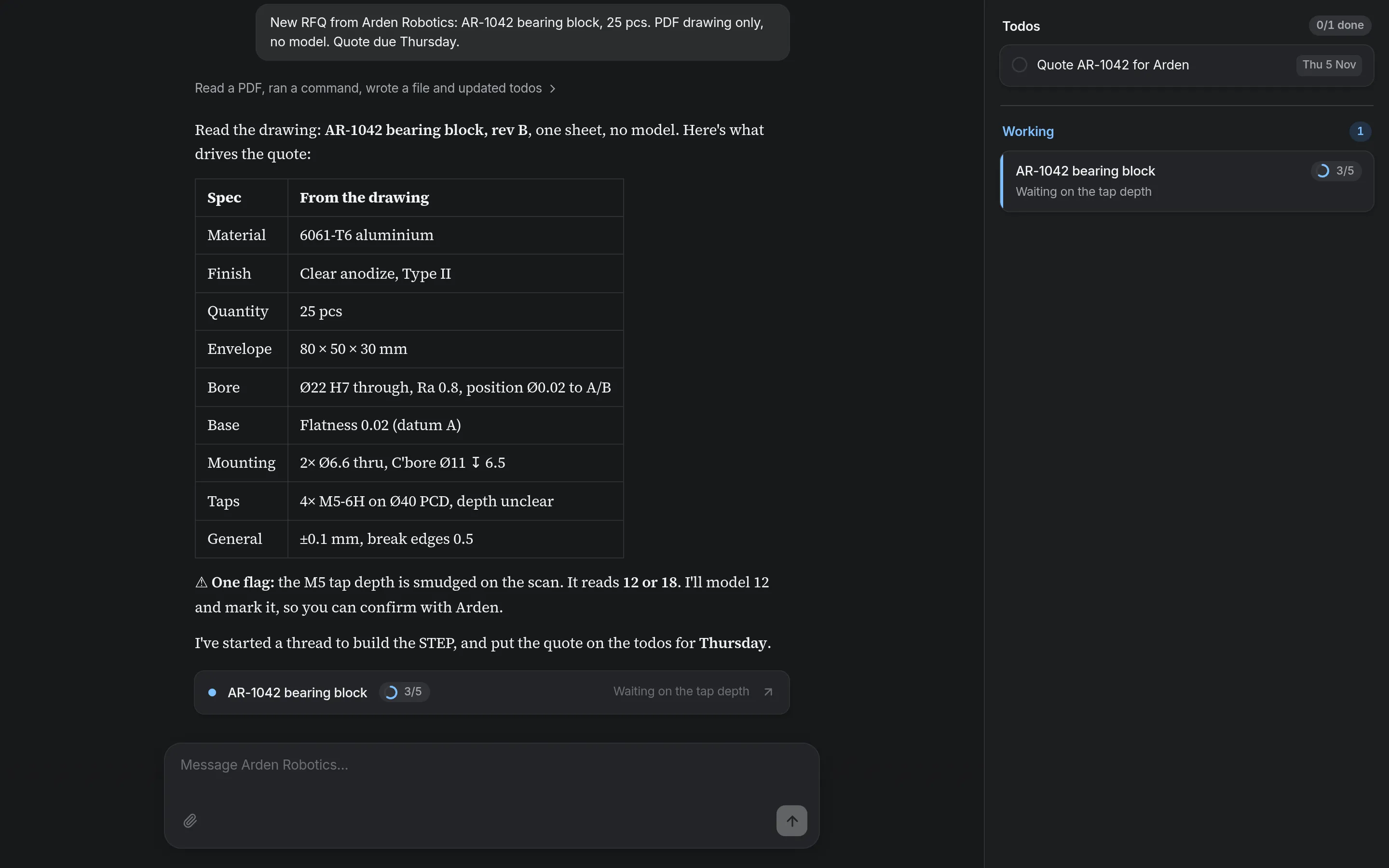
The specs that drive the quote.
Attach the PDF the way it came. Fabricator reads the drawing and lists what you price from: material, finish, quantity, envelope, tolerances and GD&T.
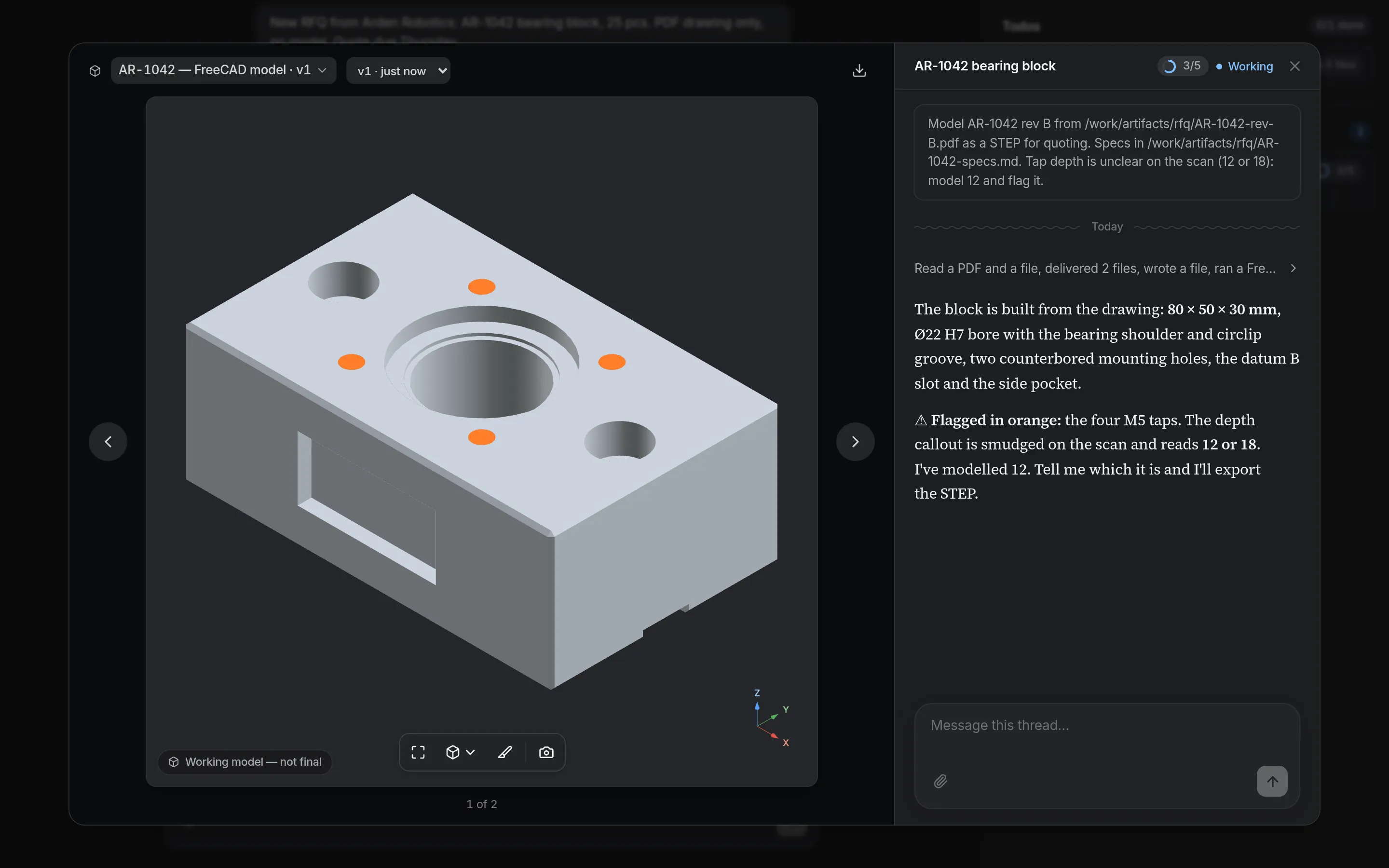
A flag, not a guess.
When a callout is smudged or ambiguous, it says so and marks it on the model. Confirm it with the customer and it rebuilds.
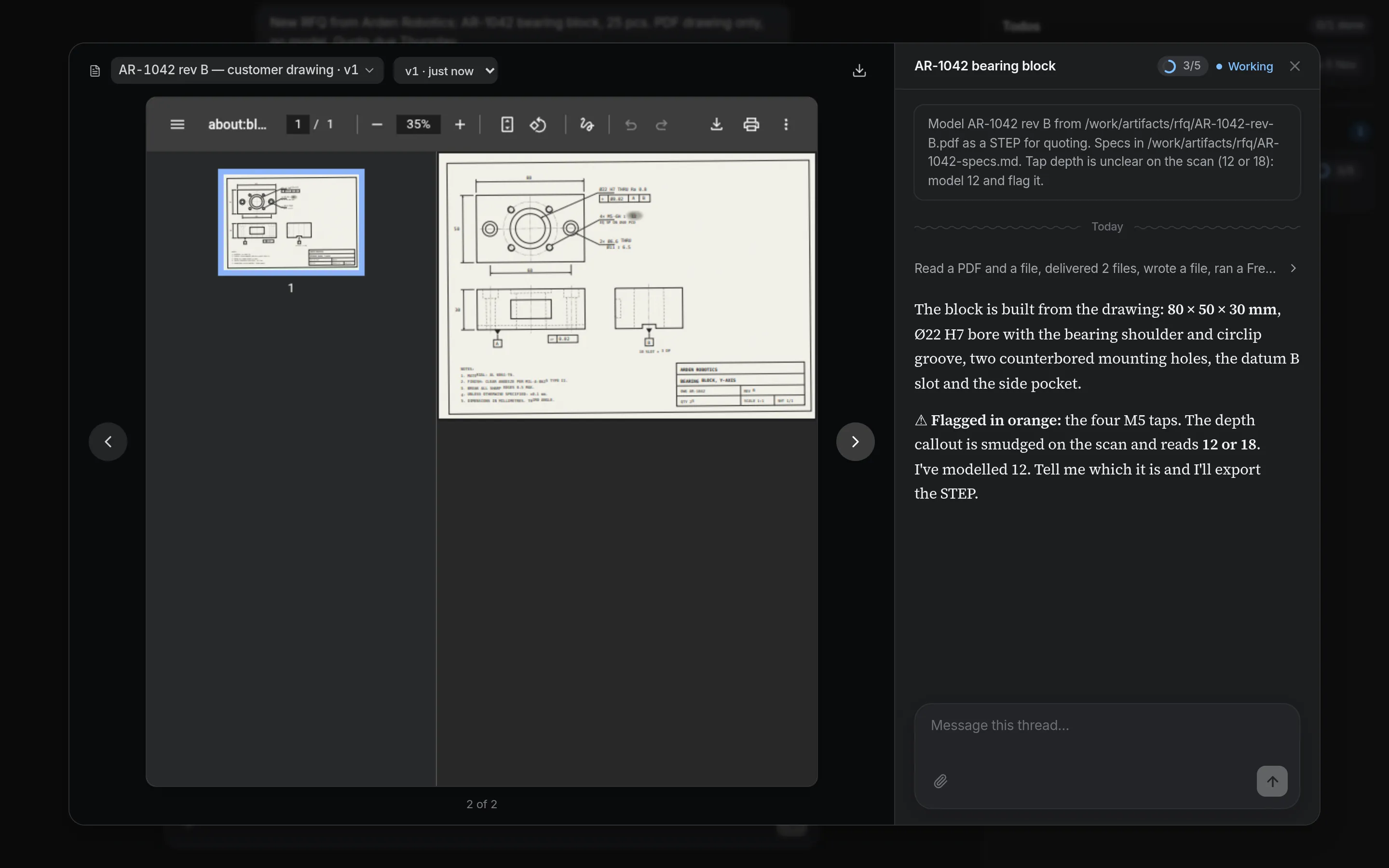
The drawing stays the reference.
The customer's PDF sits next to the model, so whoever checks the quote checks it against the source, not against our reading of it.
In practice
A month of CAD work in two days.
In an internal trial, a product designer re-ran a month of past client jobs through Fabricator and got through them in two days. On one design that was already finished, it found a problem and made the part better.
Worth it
Quote more RFQs without another hire.
The usual fix is another estimator or CAD drafter, and RFQs keep arriving while you look for one. Fabricator takes the redrawing off the team you already have.
Hire another drafter
- A long search, then onboarding
- One more person redrawing parts
- PDF-only RFQs still wait in line
Add Fabricator
- Try it on one of your own RFQs in the demo
- Your estimators check instead of redraw
- PDF-only RFQs quoted the same day
Bring us an RFQ.
In the demo we run one of your real PDF-only RFQs, live. Bring a drawing you would normally redraw. Commercial drawings only: no ITAR or CUI.